Monday, 2 December 2013

Visual Codes - Body Language


GCSE 15/4/13

Body language and dress codes.

Body language is an important aspect of any performance.
An actor's body language plays a crucial part in telling the audience about the character they are playing.

Albert Mehnarabian
In personal communication, the words of a speaker are just a part of his efforts to communicate. The pitch and tone of his voice, the speed and rhythm of the spoken word and the pauses between his words may express more than what is being communicated by words alone. Further, his gestures, posture, pose and expressions usually convey a variety of subtle signals. These non-verbal elements can present a listener with important clues to the speaker’s thoughts and feelings, thus substantiating or contradicting the speaker’s words.
For example, if a person states, “I do not have a problem with you!” while avoiding eye-contact, looking anxious and maintaining a closed body language, it is likely that the listener will trust the predominant form of communication, which to Prof. Mehrabian’s findings is non-verbal (38% + 55%), rather than the literal meaning of the words (7%).


What is body language?
Body language is the way in which our bodies communicate our own or a character's attitudes. An audience or viewer can watch it to pick up on someone's age, emotions, status, or health.

For example, a student being told off by a teacher in a tv drama can easily tell the audience that she's not feeling sorry for what she's done by:
curling her lip
showing a bored look in her eyes
having her head slightly lowered
putting a hand on her hip
having her hip stuck out, with her weight on one leg.

Still_01

In this still from the comedy series 'Little Britain', the schoolgirl character's body language suggests defiance - she has her hand on her hip, and is not making eye contact with the teacher. Notice the teacher character's body language too - his face is stern, and he is looking down directly onto the schoolgirl character.

Body language can say a great deal more than the words we use. There are three main types of body language that you need to think about as part of your speaking and listening skills - eye contact, body position and gesture and movement.


Different types of body language
Body language is the most important aspect of face-to-face communication. Anything you say can be enhanced or undermined by how you sit or stand or how you move your eyes. If you look bored then the audience will be.
The purpose of any face-to-face communication is to engage the people you are talking to. They will then listen to what you have to say. If your body language is right, they will already be persuaded that you are worth listening to.

There are three main types of body language:
eye contact
body position
gesture and movement


Eye contact

02, 03 eyes


Eye contact is vital. If you want someone to listen then you need to look at them - not for too long, of course, but enough to show you are addressing them and that they might want to listen. If you are in a one-to-one situation, such as a job interview, you need to look away every now and again (for example, looking thoughtfully into the distance when you are asked to question, before looking back at the interviewer as you give your answer).
If you are presenting, then you should aim to make eye contact with as many people as possible. Don't stare at anyone in particular, just keep moving to each individual and try to hold their gaze for a moment. If you are in a role-play then you need to look at the people who are talking and make sure that people (such as your teacher) can see you looking at them.
Finally, it is really important that you look at people when they ask you questions and you should give a direct reply when you answer.

Body position


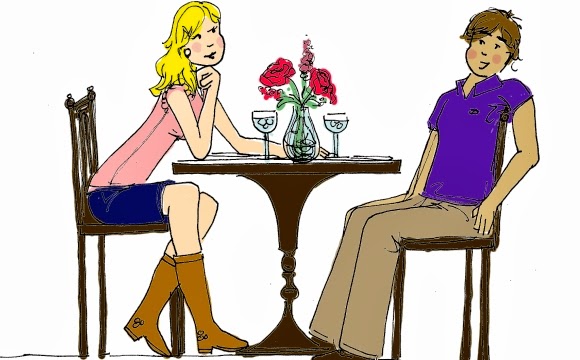
You can tell by looking at someone whether they are excited, bored, relaxed or stressed. If their shoulders are slumped, their head hanging down or their arms and legs are tightly crossed it sends a message about how they are feeling.
To get someone interested in what you're saying you need to look interested yourself. So if you're sitting down, you be should lean forward with your arms open and not crossed. Crossing your arms looks defensive (as if you are worried or scared about something).
If you're relaxed, then you can sit back and cross your legs as long as it is appropriate to the situation. In a job interview that could seem too casual. If you are role-playing a confident boss it may be right. If you're standing up you will need to hold your head up and have your arms open - that way you can get the final aspects of body language right.

04_hands behind  head


One of the most common body language gestures, when someone holds their hands locked behind their head so as to support the head with the palms of their hands, they are showing superiority, cockiness and arrogance. You’ll find some of the guys in the corporate executive offices show this gesture, though not for long as executive leadership courses will strike this sign of arrogance out of them.

05_chair straddling


When someone straddles a chair, they are showing an aggressive body language gesture while protecting themselves symbolically with the chair. This gesture shows a desire to dominate the conversation.


06_Legs apart


The most popular body language gesture in the body language of legs. Standing or sitting with the legs spread is the most common superiority / dominance position of men because it clearly puts the crown jewels on display. Often when one man assumes this position, other men in the group will do so too.

07_Body Language


The man on the left is straddling his chair in an attempt to take control of the discussion or to dominate the man on the right. He is also using the direct body point at the man on the right. He has clenched fingers and his feet are locked together under his chair, showing a frustrated attitude, which means that he is probably having difficulty in getting his point across. The man in the centre feels superior to the other two because of the hands-behind-head gesture he has taken. He also has the figure 4 leg lock position, meaning that he will compete or be argumentative. He has a high-status chair that swivels, leans back and has wheels and arm rests. The man on the right is seated on a low-status chair that has fixed legs and no accessories. His arms and legs are tightly crossed (defensive) and his head is down (hostile), indicating that he does not buy what he hears.

08_Pen in mouth


Putting a pen or other object in the mouth is a clear sign of insecurity.


09_head duck


Raising the shoulders and pulling the head down between them lets a person protect the vulnerable neck and throat from injury. It's the action used when a person hears a loud bang behind them or if they think something will fall on them. When it's used in a personal or business context it implies a submissive apology, which detracts from any encounter where you are trying to appear confident.
When someone walks past others who are talking, admiring a view or listening to a speaker, they pull their head down, turn their shoulders in and try to appear smaller and less significant. This is known as the Head Duck. It is also used by subordinates approaching superiors, and reveals the status and Power play between individuals

10_11_Lean forward


When you’re talking to someone and they lean their head forwards, you can feel assured that they are interested in what you are saying.

12_Head up

When the head is lifted high with the chin jutting forward it signals superiority, fearlessness or arrogance. The person intentionally exposes their throat and they gain additional height which allows them to 'look down their nose' at you. Large chins are the result of high testosterone levels which is why chin-jutting is associated with power and aggression.


13_Head down
When the chin is down, it signals that a negative, judgemental or aggressive attitude exists. Critical evaluations are normally made with the head down and until the person's head lifts or tilts, you can have a problem, professional presenters and trainers are often confronted by audiences who are seated with their heads down and arms folded on their chests

Gesture and movement

Look at a television conversation with the sound off, and you will notice people's gestures as they talk. How people sit or stand is noticeable, but what really emphasises face-to-face conversation is how people use their expressions, heads, hands and shoulders to make a point or emphasise words. Gestures bring life to a conversation.
                        Spread arms can express the size of an idea or object.
                        A closed fist can express strength or anger.
                        An open palm can ask for calm (if the hand is raised) or appeal to reason (with fingers pointing down).
                        Moving the whole body can express energy or urgency.
Walking around a room can also engage more people because you can close in on them to give a more personal edge to a presentation. Moving too much can be hectic, though. It can distract from what you are saying. So think about what is appropriate - and make sure that when you move you know where you are going and why.

Online test:


Task:
Analyse the Kidulthood opening scene with consideration given to body language.
Use the list of keywords provided.


Genre Conventions in TV drama 2


How would you define TV Drama?
TV drama is a fictionalised account of a narrative in the medium of television. TV drama can be split into several sub-genres.
What does genre conventions mean?
A set of rules that the genre uses repeatedly. A well-used formula.
Soap operas are on-going and may continue for a long time. Some conventions are:
  • Set in a particular place
  • Shown on TV
  • Focus on family life and personal relationships
  • Based on a group of characters living in a particular place
  • Romance, love and secret relationship are in most storylines.
  • Focus on working-class communities.
  • Everyday situations and relationships

  • Multi stranded narratives
  • No relation to outside world (What happens in the real world doesn't affect the characters in the soap)
  • sponsors - (soap operas are funded by product placement)
  • not unlikely narratives ( but unlikely for them all to happen to the same people in the same village / street)
  • Creates realism ( placement of clocks, diegetic sound, ect)
·       Dramatic narrative (storyline)
·       Ensemble cast (each character – own storyline)
·       Expressive lighting techniques dependent on sub genre e.g. high key lighting in Period Drama

·       High production value sound/emotive
·       Exaggerated, hyper real representations of character – cultural stereotyping for entertainment values
·       Scheduled Prime Time (but can be dependent on sub genre e.g. some Crime Drama post watershed)
·       Scheduled in 30 minute / 60 minute (more common) or 90 minute feature length slots
·       Mass, mainstream target audience (non challenging representations)
·       Target audience identified per sub genre e.g. Teen Dramas, Crime Drama (older demographic)
·       3 Act narrative structure (beginning, middle and an end)
·       Use of Binary Oppositions (creates conflict and anchors meaning)
·       Critical and commercial success – reputation for pedigree
·       Reputation for quality – success is important for the broadcaster
·       Primary channels – BBC1 and BBC2 with some slots allocated to Downton Abbey
·       Open narratives common – some mini series
·       Many TV Dramas made by independent British Production Companies and commissioned by the BBC/ITV/Sky 1/2/3, Sky Atlantic

TV Drama and Narrative types
Continuing Series: a series where the narrative or plot doesn’t end. The official title for Soap Operas. Series: The main plot or narrative continues and is resolved at the end of the season. Key characters and plotlines are carried over to the next season. ( Lost, 24 )
Serials: Are similar to series but each episode is a self-contained narrative.( Shameless, Spooks, Hustle ) 
One Offs: self-explanatory, drama where the narrative begins and ends in one often feature length episode. A variation on this is the two part drama.
What are the sub-genres of TV Drama?:
Continuing Dramas :  ‘ Eastenders’, ‘Coronation Street’…
Crime and Police Dramas : ‘ The Bill’, ‘The Wire’, ‘CSI..
Medical/Emergency Dramas : ‘ ER’, ‘Casualty’….
Sci-Fi/ Fantasy Dramas : ‘ Dr Who’, ‘Heroes’…
Literary adaptations : Pride and Prejudice’, Oliver Twist
Contemporary melodramas : ‘ Skins’, ‘Waterloo Road’
Comedy Dramas: ‘Shameless’, ‘Desperate Housewives’

Genre conventions in TV drama


TV drama offers a wide range of genres and sub genres to consider. 
The definition of a TV drama is: 'Television content that is scripted and (normally) fictional. This excludes, for example; news, reality, sport etc.
There are many sub genres within TV drama, some of these are: soap operas, reality - real life and constructed, medical and crime. 
Generally, TV dramas focus on the stereotypes of people and often exaggerate them to create a programme. 
For example, Eastenders' characters have very broad cockney accents. The costume on say a teenage mum makes her an instantly recognisable type.

The definition of a reality TV show is: 'A genre of television programming that presents purportedly unscripted dramatic or humorous situations, documents etc.' 

Three examples of this genre are The only way is Essex, Geordie Shore and The Real Housewives of New York City. What these all have in common is a great feature that reality TV shows hold, they all focus their time on a number of people all interconnected with each other. The characters are all familiar with each other.


The first thing we see is a statement. 'This programme contains flash cars, big watches and extreme posing. the tans you see might be fake, but the people are all real though some of what they do has been set up purely for your entertainment.' This is complimented with a voice over and is the only part of speech we here through the whole opening. It offers humour, enlightenment into what the programme may contain and also warns us that all the people are real and what they say isn't scripted, however some of what they have been told to do has been set up, but only to make sure that the programme isn't boring and that it keeps us entertained. The whole reason for this statement, although putting across a vital point at the end is to keep the film light hearted and entertain us. 
Behind the moving images we have a very catchy soundtrack. As soon as we hear this track, we will now associate it with The Only Way is Essex. This is a vital part of a TV drama as the soundtrack is what helps the audience to recognise the programme. We are then introduced to all of the characters that will be featured in the programme. As you can see most of them are very stereotypical. All of the women and men have bright fake tans, heavy make up, all well dressed and hair perfect. They are trying to sell the image of Essex as being constantly well dressed and done up for an average day. Later on do we find out that the Essex accent is pulled through nice and strong to compliment the image. The last image we are graced with is the final title and the whole cast together. The title itself is also staged in a way that will make us associate the font and colours with the programme.

Task:
Watch Geordie Shore and analyse giving consideration to genre conventions.

Genre conventions in Film Posters

Posters occupy a space between art and advertising. 
They have a clear commercial purpose - to promote an event or product - but they also have artistic value. People buy them and hang them on their walls. Museums have whole galleries devoted to poster art. 
When analysing a poster in media studies it is important that you evaluate both how well it fulfills its purpose (i.e. promotion) as well as its aesthetic value.


First steps

What are the main colors used in the poster? What do they connote?

What symbols are used in the poster? Do you need audience foreknowledge to decode the symbols?


What are the main figures/objects/background of the poster? 


Are they represented photographically, graphically, or illustratively?

Are the messages in the poster primarily visual, verbal, or both?Who do you think is the intended audience for the poster?
When analysing a poster, you should consider the following broad questions before you start to focus on the details:
Given that all movie posters have the same purpose - to get audiences to go see a movie - what persuasive techniques are used by the poster?


Critical Evaluation


The audience have to pass judgement on the poster.


  • Is it a good poster?
  • Does it communicate effectively with the audience?
  • Are there any alternative readings which might harm the message of the marketing campaign?
  • Is the poster offensive in any way? e.g. representation

It must be eye catching and captivating to the audience• 
There must be a focal picture that will draw in the audiences eye• 
The title is displayed in a large, eye-catching font• 
It clearly defines the film’s genre• 
The poster should be designed to attract the largest audience possible•

There is usually an indication of when the film is being released – either a date or ‘Coming Soon’, although they are sometimes less specific, for example they might say ‘In Cinemas This Summer’• 

Information on the Directors and Production Company is often displayed in a billing block at the bottom of the poster• 
There could be reviews or titles of other films that the company has made (Cars/Toy Story)


Media texts and Genre

Keywords: Media Text, Genre.

Media Text
Media text = any constructed media product or piece of communication, whether print or audiovisual, which can be analysed and deconstructed.
Think of a media form such as Radio, TV, Newspaper, Magazine or Website and a text as being a 'product' of that form.

For example: 

Media form = TV 
Media text = Match of the Day


Media form = Magazine 
Media text = FHM


Media form = Newspaper
Media text = The Daily Mirror


Genre
Genre is the French word for type
Genre is a means of classification for texts based on common elements and shared characteristics - the correct term for this is 'generic conventions and elements.' 

When working out what genre a media text is, the following generic 'ingredients' need to be analysed (when you 'channel hop' or surf the Internet, the brain does this subconsciously because all genres have certain common characteristics the brain picks up on):

1) Mise-en-scene (iconography, props, set design, special effects, lighting, costumes, cast, shot types, camera angles etc.)
2) Typical narratives (historic/contemporary/medical/crime etc.)
3) Generic/stock characters e.g. doctors, police, stereotypical gender roles, different classes etc.
4) Themes e.g. police v criminals, affairs, youth v age, working class v upper class etc.