Wednesday, 4 December 2013

Technical Codes - Lighting


Lighting and colour can be used to create a certain atmosphere or mood
and can even be used symbolically.

Certainly directors are aware of the power of cultural connotations - for example if I say WHITE? -  what associations immediately come to mind… or RED?

Certain genres use colour more obviously than others and you have probably already noticed colours used in  sci-fi?    Horror?

Filmmakers use colour and lighting effects to make audiences well aware of the kind of film they are watching and when teaching your students the basics of film language, here’s what you need to know about lighting effects:

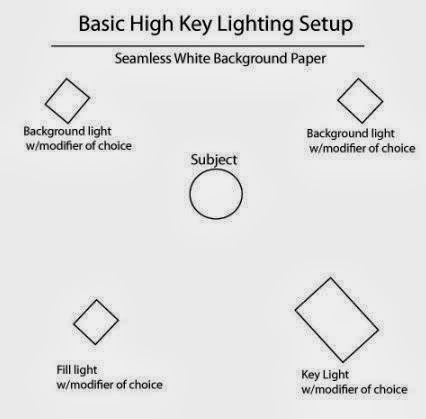
•The basic organisation of  lighting looks like this:


The KEY LIGHT is the term for a powerful light that casts sharp, black shadows behind the things it illuminates. It’s the main source of light in a scene.

FILL LIGHTS can be used to soften these shadows and basically fill them in. More or less of these will be used depending on whether images are to be sharp or soft.
If people or objects are lit from behind it makes them stand out from the background and they become more prominent. Underlighting (from below) and toplighting create different kinds of shadow.

There are two main ways of describing the use of these lights -
HIGH KEY LIGHTING - means the use a lots of fill lights along with the key lights so everything is brightly lit and there are few shadows. This is the style you would expect in romantic comedies, youth pictures, the colour you’d expect from a glossy Hollywood film.


LOW KEY LIGHTING - uses fewer fills, so more shadows are created with definite pools of light interspersed - you might associate this with horror films and is the style of lighting associated with film noir.


Technical Codes - Sound

Starter: 
List the sound effect that you might use if you wanted to emphasise or draw attention to the following
  • A (sad) death
  • A high cliff or mountain is shown
  • A bomb is about to explode
  • A villain falls to their death

Sound Terminology

DIEGETIC
A sound that is part of the film world and usually heard by those in it

NON-DIEGETIC
A sound which is added later during editing for effect and therefore cannot be heard by those in the film world 


MUSIC
A soundtrack added during editing and the sound and tone can affect the meaning of the scene


ASYNCHRONOUS SOUND
Sound which does not appear to arise directly from the scene, such as soundtrack music or voiceover


SYNCHRONOUS SOUND
Sound which is directly matched to a moving image. The term is used in two ways in different sources:

-  Sound recorded at the same time as the images – for example, dialogue spoken by the actors on set. This does not include any sound added in post production
-  Sound which appears to the audience to come from the scene, whether or not it was actually recorded with the images. Thus includes post-synched dialogue, sound effects and foley. Also known as parallel sound

SOUND EFFECTS
Usually added to film in post-production, they may be used to build up ambience or reinforce action.


SOUND BRIDGE
Film and TV editing technique in which visual cuts are deliberately not matched with audio cuts. For example, the editor may cut to a completely new scene, but allow sound from the preceding scene to run on for a short time. Alternatively, we may hear the sound of the next scene before we see it.


VOICE OVER
A type of non-diegetic, asynchronous sound in which the audience hear a voice that does not have a source either within the frame or within hearing distance, and which is not heard by the people on screen. Voice overs allow us to see things from a particular character’s point of view

CONTRAPUNTAL SOUND
Sounds that do not easily match the images they are accompanying, or even go against them. This can have a disorientating effect upon the audience and make them question what they are seeing.


TASK:

Watch the clip from the film 'The Strangers' and using the time code as a reference, note down the different types of sound you can hear.


Technical Codes - Camera angles and framing


http://www.bbc.co.uk/learningzone/clips/genre-analysis-drama/11108.html


Camera Angles


Describing Shots

When describing camera angles, or creating them yourself, you have to think about three important factors

— The FRAMING or the LENGTH of shot

— The ANGLE of the shot

— If there is any MOVEMENT involved

When describing different cinematic shots, different terms are used to indicate the amount of subject matter contained within a frame, how far away the camera is from the subject, and the perspective of the viewer. Each different shot has a different purpose and effect. A change between two different shots is called a CUT.

Framing or Shot Length


1 . Extreme long shot


This can be taken from as much as a quarter of a mile away, and is generally used as a scene-setting, establishing shot. It normally shows an EXTERIOR, eg the outside of a building, or a landscape, and is often used to show scenes of thrilling action eg in a war film or disaster movie. There will be very little detail visible in the shot, it's meant to give a general impression rather than specific information.

The extreme long shot on the left is taken from a distance, but denotes a precise location - it might even connote all of the entertainment industry if used as the opening shot in a news story


2. Long Shot


This is the most difficult to categorise precisely, but is generally one which shows the image as approximately "life" size ie corresponding to the real distance between the audience and the screen in a cinema (the figure of a man would appear as six feet tall). This category includes the FULL SHOT showing the entire human body, with the head near the top of the frame and the feet near the bottom. While the focus is on characters, plenty of background detail still emerges: we can tell the coffins on the right are in a Western-style setting, for instance.

3. Medium Shot


Contains a figure from the knees/waist up and is normally used for dialogue scenes, or to show some detail of action. Variations on this include the TWO SHOT (containing two figures from the waist up) and the THREE SHOT (contains 3 figures...). NB. Any more than three figures and the shot tends to become a long shot. Background detail is minimal, probably because location has been established earlier in the scene - the audience already know where they are and now want to focus on dialogue and character interation. Another variation in this category is the OVER-THE-SHOULDER-SHOT, which positions the camera behind one figure, revealing the other figure, and part of the first figure's back, head and shoulder.

4. Close-Up


This shows very little background, and concentrates on either a face, or a specific detail of mise en scène. Everything else is just a blur in the background. This shot magnifies the object (think of how big it looks on a cinema screen) and shows the importance of things, be it words written on paper, or the expression on someone's face. The close-up takes us into the mind of a character. In reality, we only let people that we really trust get THAT close to our face - mothers, children and lovers, usually - so a close up of a face is a very intimate shot. A film-maker may use this to make us feel extra comfortable or extremely uncomfortable about a character, and usually uses a zoom lens in order to get the required framing.

5. Extreme Close-Up


As its name suggests, an extreme version of the close up, generally magnifying beyond what the human eye would experience in reality. An extreme close-up of a face, for instance, would show only the mouth or eyes, with no background detail whatsoever. This is a very artificial shot, and can be used for dramatic effect. The tight focus required means that extra care must be taken when setting up and lighting the shot - the slightest camera shake or error in focal length is very noticeable.

Camera Angles

The relationship between the camera and the object being photographed (ie the ANGLE) gives emotional information to an audience, and guides their judgment about the character or object in shot. The more extreme the angle (ie the further away it is from eye left), the more symbolic and heavily-loaded the shot.

1. The Bird's-Eye view

This shows a scene from directly overhead, a very unnatural and strange angle. Familiar objects viewed from this angle might seem totally unrecognisable at first (umbrellas in a crowd, dancers' legs). This shot does, however, put the audience in a godlike position, looking down on the action. People can be made to look insignificant, ant-like, part of a wider scheme of things. Hitchcock (and his admirers, like Brian de Palma) is fond of this style of shot.

2. High Angle

Not so extreme as a bird's eye view. The camera is elevated above the action using a crane to give a general overview. High angles make the object photographed seem smaller, and less significant (or scary). The object or character often gets swallowed up by their setting - they become part of a wider picture.

3. Eye Level

A fairly neutral shot; the camera is positioned as though it is a human actually observing a scene, so that eg actors' heads are on a level with the focus. The camera will be placed approximately five to six feet from the ground.

4. Low Angle

These increase height (useful for short actors like Tom Cruise or James McAvoy) and give a sense of speeded motion. Low angles help give a sense of confusion to a viewer, of powerlessness within the action of a scene. The background of a low angle shot will tend to be just sky or ceiling, the lack of detail about the setting adding to the disorientation of the viewer. The added height of the object may make it inspire fear and insecurity in the viewer, who is psychologically dominated by the figure on the screen.

5. Oblique/Canted Angle

Sometimes the camera is tilted (ie is not placed horizontal to floor level), to suggest imbalance, transition and instability (very popular in horror movies). This technique is used to suggest POINT-OF-View shots (ie when the camera becomes the 'eyes' of one particular character,seeing what they see — a hand held camera is often used for this.

Camera Movement

A director may choose to move action along by telling the story as a series of cuts, going from one shot to another, or they may decide to move the camera with the action. Moving the camera often takes a great deal of time, and makes the action seem slower, as it takes several second for a moving camera shot to be effective, when the same information may be placed on screen in a series of fast cuts. Not only must the style of movement be chosen, but the method of actually moving the camera must be selected too. There are seven basic methods:

1. Pans

A movement which scans a scene horizontally. The camera is placed on a tripod, which operates as a stationary axis point as the camera is turned, often to follow a moving object which is kept in the middle of the frame.

2. Tilts

A movement which scans a scene vertically, otherwise similar to a pan.

3. Dolly Shots

Sometimes called TRUCKING or TRACKING shots. The camera is placed on a moving vehicle and moves alongside the action, generally following a moving figure or object. Complicated dolly shots will involve a track being laid on set for the camera to follow, hence the name. The camera might be mounted on a car, a plane, or even a shopping trolley (good method for independent film-makers looking to save a few dollars). A dolly shot may be a good way of portraying movement, the journey of a character for instance, or for moving from a long shot to a close-up, gradually focusing the audience on a particular object or character.

4. Hand-held shots

The hand-held movie camera first saw widespread use during World War II, when news reporters took their windup Arriflexes and Eyemos into the heat of battle, producing some of the most arresting footage of the twentieth century. After the war, it took a while for commercially produced movies to catch up, and documentary makers led the way, demanding the production of smaller, lighter cameras that could be moved in and out of a scene with speed, producing a "fly-on-the-wall" effect.This aesthetic took a while to catch on with mainstream Hollywood, as it gives a jerky, ragged effect, totally at odds with the organised smoothness of a dolly shot. The Steadicam (a heavy contraption which is attached a camera to an operator by a harness. The camera is stabilized so it moves independently) was debuted in Marathon Man (1976), bringing a new smoothness to hand held camera movement and has been used to great effect in movies and TV shows ever since. No "walk and talk" sequence would be complete without one. Hand held cameras denote a certain kind of gritty realism, and they can make the audience feel as though they are part of a scene, rather than viewing it from a detached, frozen position.

5. Crane Shots

Basically, dolly-shots-in-the-air. A crane (or jib), is a large, heavy piece of equipment, but is a useful way of moving a camera - it can move up, down, left, right, swooping in on action or moving diagonally out of it. The camera operator and camera are counter-balanced by a heavy weight, and trust their safety to a skilled crane/jib operator.

6. Zoom Lenses

A zoom lens contains a mechanism that changes the magnification of an image. On a still camera, this means that the photographer can get a 'close up' shot while still being some distance from the subject. A video zoom lens can change the position of the audience, either very quickly (a smash zoom) or slowly, without moving the camera an inch, thus saving a lot of time and trouble. The drawbacks to zoom use include the fact that while a dolly shot involves a steady movement similar to the focusing change in the human eye, the zoom lens tends to be jerky (unless used very slowly) and to distort an image, making objects appear closer together than they really are. Zoom lenses are also drastically over-used by many directors (including those holding palmcorders), who try to give the impression of movement and excitement in a scene where it does not exist. Use with caution - and a tripod!

7. The Aerial Shot

An exciting variation of a crane shot, usually taken from a helicopter. This is often used at the beginning of a film, in order to establish setting and movement. A helicopter is like a particularly flexible sort of crane - it can go anywhere, keep up with anything, move in and out of a scene, and convey real drama and exhilaration — so long as you don't need to get too close to your actors or use location sound with the shots.

Task:

Identify 10 shots from this clip and say why they are in place.

Tuesday, 3 December 2013

Introduction to Iconography

Learning objective:
To introduce iconography and identify how it can give clues to genre.


In Media Studies we see iconography as part of genre, and particularly film genre. Students need to know the term and how it is used. It is quite a complex concept, that informs image analysis and the deconstruction of genre. Iconography originates from the study of art.


 In Europe in the15th & 16th centuries artists creating work of a Christian nature would look up reference books to check the colours, composition, hand gestures, poses and facial expressions that past masters traditionally used, because they conveyed the most significant meaning to the ordinary person. These meaningful images came to be known as iconic, and their use is iconography.


For example most paintings of the Madonna, including modern ones, show her in a robe of deep blue. The Virgin wears a blue robe, the colour symbolic of heaven and a reminder of the Virgin’s role as Queen of Heaven. This colour came to be an icon for her role as a spiritual mother who has dignity and religious importance. The blue robe is part of the iconography of this form of art throughout the centuries.
Right – Madonna and Child by Donielle Boal fineartamerica.com/featured/madonna-and-child…
Left – Madonna and Five Angels by Botticelli

Definition


Steve Campsall’s definition of iconography is useful. (Steve Campsall – Media – GCSE Film Analysis Guide (3) – SJC)
‘Iconography is an important aspect of genre. We expect to see certain objects on screen when we see a particular genre, for example, in a Western, dusty lonely roads, saloon bars, cowboy hats and horses, jails, sheriffs badges, guns, etc.. 
In a modern horror film, we expect young girls, ‘normal’ objects, use of dark and light, etc. These ‘genre indicators’ are called the iconography of the mise-en-scene or genre.’

So iconography can be defined as those particular signs we associate with particular genres.
Film producers use images that belong to the iconography of the genre to excite audience expectations, and to show that the film is within a certain genre. If you wanted to see a comfortable rom-com you would not go and see Prom Night, but if you wanted to be scared then this should do the trick.
Another way of putting it is to say genre can be identified by the look of the images in the text – this is the iconography, or the signs, that are associated with a genre. Iconography includes a wide range of ‘signs
To become part of the iconography of a genre a pattern of visual signs remain constant in that genre over a period of time. Some of the things that make up genre iconography include:

Costume


Cowboys wear ten gallon hats;
characters in costume dramas wear wigs and historic costumes;
tough guys in thrillers wear black leather jackets;
in high school movies everyone wears tight T shirts, sneakers and some wear hoodies.

Settings

Thrillers are set in challenging urban neighbourhoods found in big cities such as LA or New York. Horror movies since Halloween (1978) tend to be set in typically quiet suburban settings. Sci-fi films inhabit futuristic cities with flying cars, adverts in the sky (e.g. Bladerunner), and high tech interiors.

Stars

Some film stars can be an important part of a film’s iconography, and carry their own iconographic meanings.
This was perhaps more evident in the past where stars like John Wayne are always associated with Westerns. Modern stars such as Clint Eastwood carry the iconographic meaning of theloner against the world. Campsall (ibid) says:

stars create expectations of character and action, genre, and powerful iconic representations of such as masculinity and femininity.’


Props


These are the movable objects that are so important to many movies.
Gangster films must have guns.
Classic gangster films have a certain form of gun – the violin case machine gun.
Characters in Westerns carry classic Colt revolvers, or the Winchester rifle.
Police and thrillers use expensive multi-shot shiny hand guns.
Cars are important for what they signify in a film.
Large American gas guzzling V8 saloons can signify the freedom of the open road, as well as escape, and refuge.
Cars can be an extension of a character’s personality as well as a device to create excitement and thrills.

Signs and Signifiers

When we look at the iconography of a film we are looking at the way certain images conveylayers of meaning – in other words there is much more meaning than is at first apparent. The science of how meaning is created by signs is called semiology, from the Greek work semeion meaning sign. Semiology explores the way signs and codes are used in texts.

So what is Semiotics?

Semiotics is the study of signs, symbols and sign systems, and their meanings. Semiotics is a way of explaining how we make meaning in a text. But meaning is not just what you read or see.
 Semiotics tells us that all meaning is ‘encoded’ in objects and images that create meaning.

The word ‘love’ can be seen as the sign of an idea that encodes many different meanings. As you read the word you interpret it’s meaning according to who you are, your education and yourcultural values, and the context that the word is in. We learn to decode this meaning as we grow up and are educated. Our understanding of the meaning of the word love depends, to a certain extent, on what other people over the centuries have already decided it means. 
 Activity
1. How would you interpret the word love in this picture?
 2. Create a sign of the meaning of love without the word love in it.

Semiotics

In semiotics, a sign is the smallest amount of meaning we can decode, and which also contributes to overall meaning.
For example, in the way you dress each day you encode an ensemble of signs to create a meaning. This might be a ‘designer’ meaning suggesting wealth and power, or a street-cred meaning suggesting an anti establishment attitude or just person taste.
 If all this sounds very complicated look at it this way – a sign has more than one meaning especially when it is in a media text such as a film.

So meaning works in two distinct ways.
1. A sign has a basic meaning literal meaning – for example – a poppy is a flower. This is called its denotation.
2. A sign can also have another second meaning related to something completely different, which is often related to its context. This is called its connotation.
If you put the poppy in a field with another sign which has many meanings such as a cross, you have an overall image with multiple meanings. 
In the above example: the poppy is a sign which when added to the sign of a cross connotates thecultural code of remembrance for those killed in war, particularly the first World War.

In November in the UK the red poppy on its own has connotations. Many people wear a poppy as a sign to connotate that they share in the grief for those fallen in war. In another culture the poppy sign could be interpreted quite differently.
We can say that the poppy is a flower but it has a connotation which is the extra meaning brought to the image through the cultural values of the reader. 
In semiotics, a code is any group of signs that seem to go together to create an overall unit of meaning. So the poppy and the cross are a code. See:http://www.greatwar.co.uk/article/remembrance-poppy.htm

Semiotics Theory

In semiotics there are three basic types of sign and code:
1. Iconic signs and codes are created to represent the thing itself so that an image of a mafia gangster looks like, or signifies, a mafia gangster.
Iconic codes also work to create extra meaning so that when we see an image of a gangster we associate it with meanings of lawlessness, of a person involved in drug dealing, a dangerous person who will kill, and who our culture identifies as a definite ‘baddie’. 
2. Indexical signs are different. They work by indirectly suggesting a meaning by prodding our existing knowledge and understanding.

For example a heart shape signifies romance suggesting love between two people. The heart shape has no meaning in itself, except to symbolise love. Indexical codes are a type of media shorthand which can be seen everywhere in advertising and in the way signs are used to give us information such as road signs.
Task 1:
Think of all the memories, ideas, feelings, and cultural references that the indexical sign of a lighted Christmas tree invokes.


Write a list now – write about the personal significances the Christmas tree has for you, and write about the wider cultural significances such as peace, family, togetherness, presents, and spiritual renewal.
 You can add your musical signifiers too, which may not be just Christmas songs and carols.
 3. Symbolic codes act as signifiers of meaning which are not remotely the same as what they actually look like (what they denote).


Often in a film the bad guy wears all black, and this is to symbolise evil.
An all black outfit may suggest ‘cool’ too. Both meanings have nothing intrinsically to do with the clothes themselves.
In comedy sketches a burglar may wear a striped shirt, a mask, and carry a bag marked swag – we all know that this costume symbolises a comic burglar – it works as a short hand for the audience– but why the striped shirt symbolises a burglar is an interesting question.
Theorists in Semiology tell us that the meaning a code communicates is always culturally determined.  This means that we learn codes and symbols as we grow up according to our society and culture.
Well known buildings can connotate much more than the image of a large building.

Look at this picture of Buckingham Palace. What is the connotation about England? It suggests that England has a monarch, is a stable country with a well respected ruling king or Queen, who comes from a tradition of established monarchy but is not dominated by the monarch – compare this quite discrete palace to any one of Saddam Hussein’s many enormous palaces.
Somehow this picture represents aspects of Great Britain that are attractive to people from abroad. It also connotes patriotism and pride to many English people. Many well known buildings work hard to express a variety of connotations – can you think of any other famous buildings that symbolise more than just the use of building.


This seems to have come along way from film iconography but, if you think about it, it is all very similar. Think of any film that you enjoyed – the characters, the costumes, the settings, the objects, the way the film is shot, the use of lighting, the selection of shots – big close ups, or a lot of of wide shots, the way the film is edited, the use of music ( where would the film Breakfast at Tiffanys be without the song Moon River) all these things go towards the iconography of the film.
It’s really fun working out how all the signs and symbols work to create a rich cinematic experience.
Narrative Introduction

Keywords:
In Media Studies, it is important to tell the difference between narrative and story
Story = a sequence of events, known correctly as the plot
Narrative = the way those events are put together to be presented to an audience.
Therefore, when analysing a narrative we analyse the construction of the story ie the way it has been put together, not the story itself. You also need to consider what the story is about in its most basic terms, ie the theme (eg Love, war, winning).
All media texts have a narrative, whether they are a six hour TV miniseries or a one paragraph newspaper story or a glossy magazine photograph.
Analysing a narrative will involve the following:

Technical Codes

This refers to all the aspects of narrative construction that involve technical decision making. Therefore anything to do with camera angles and movement, lighting, sound, props. shot framing and composition, design and layout and editing. What do each of the choices made tell you about what is going on - for instance, is a character shot from a high or low angle and how does that make you, the audience, feel about them? How are sound effects used to help you make sense of what is going on?

Verbal Codes

The use of language - written and spoken - and signs contained in graphics. We learn a lot about a narrative from what we are told in this way, but the best narratives show rather than tell, leaving the audience to draw their own conclusions.

Symbolic Codes

These are the signs contained in the narrative that we decode as being significant and having meaning - for example a ragged coat worn by a character may mean that they are poor and possibly hungry. Think of them as clues that have to be followed, and different viewers/readers will follow clues in different ways.

Structure

Russian theorist, Tzvetan Todorov, suggests that all narratives follow a three part structure. They begin with equilibrium, where everything is balanced, progress as something comes along to disrupt that equilibrium, and finally reach a resolution, when equilibrium is restored.
Equilibrium: The way things are.
Disequilibrium: The way things are get changed, disrupted 
New equilibrium: The way things are again but with a lesson learned because of the disruption.
This simple formula can be applied to virtually all narratives - it is a more formal way of thinking about the beginning, middle and end, and it takes into account Aristotle's theory that all drama is conflict ie there is a disequilibrium at the heart of every narrative.

Character

Todorov came up with his theories after making a study of Russian folk tales. So too did Vladimir Propp, who came up with the theory that there are only a certain number of characters, who crop up in most narratives. It is easy to spot the hero and villain in most cases, but here are some others:
Protagonist (or Hero)
Leads the narrative, is usually looking for something (a quest) or trying to solve something (a mystery). Does not have to be male
Antagonist (or Villain)
Gets in the protagonist's way
Heroine
Is usually some sort of prize or reward for the hero. NB if your hero is female, your heroine can be male 
Father
An authority figure who offers a reward to the hero for completing their quest. That reward might be a prince or a princess or a cool new job
Helper
Helps the hero - often acts as a sidekick
Donor
Gives the hero something - a clue, a talisman, a special power - which helps them complete their quest
Mentor
Teaches and guides the hero
These characters and the typical things that they do can be seen across a wide range of narratives. We expect them to be there, and to behave in a certain way. We will try identifying them in Star Wars and then think about how they are used in Shrek.

Narrative Conflict

As well as Aristotle deciding that 'all drama is conflict' in the 4th century BC, 20th century theorist Claude Levi-Strauss suggested that all narratives had to be driven forward by conflict that was cause by a series of opposing forces. He called this the theory of Binary Opposition, and it is used to describe how each main force in a narrative has its equal and opposite. 
Analysing a narrative means identifying these opposing forces.
Light/Dark - Right/Wrong - Good/Evil - Poverty/ Wealth
Youth/Age - Noise/Silemce - Strength/Weakness
Understanding how the conflict between binary opposites will drive the narrative on until finally some sort of balance or resolution is achieved.
If this seems a bit complicated, don't worry.

You have been deconstructing narratives since before you could read. 

Think of all those bedtime stories - fairy tales are an excellent demonstration of the patterns and rules of narratives, and the main theorists developed their ideas from the study of fairy and folk tales across different cultures. All the theorists do is provide a formal framework for describing how you already understand the meaning and significance of a narrative.


Monday, 2 December 2013

Visual Codes - Colour Symbolism


Red – Importance – passion – love - danger

 Orange – Health – movement -dynamic

 Yellow – warmth – permanence

 Green – fresh – new – beginning

 Blue – cool – sad - authority

 Purple – wealth - luxury

 Black – evil – formality - mourning

 White – innocence – purity – formality

 Neutral – urban - sophistication

Visual Codes - Facial Expression


    Marjorie Ferguson (1980) identified four types of facial expression in the cover photos of British women’s magazines:


    1. Chocolate Box: half or full-smile, lips together or slightly parted, teeth barely visible, full or three-quarter face to camera. Projected mood: blandly pleasing, warm bath warmth, where uniformity of features in their smooth perfection is devoid of uniqueness or of individuality.


    2. Invitational: emphasis on the eyes, mouth shut or with only a hint of a smile, head to one side or looking back to camera. Projected mood: suggestive of mischief or mystery, the hint of contact potential rather than sexual promise, the cover equivalent of advertising’s soft sell.

    3. Super-smiler: full face, wide open toothy smile, head thrust forward or chin thrown back, hair often wind-blown. Projected mood: aggressive, ‘look-at-me’ demanding, the hard sell, ‘big come-on’ approach.

    4. Romantic or Sexual: a fourth and more general classification devised to include male and female ‘two-somes’; or the dreamy, heavy-lidded, unsmiling big-heads, or the overtly sensual or sexual. Projected moods: possible ‘available’ and definitely ‘available’.

    Task 1: Analyse the images below and produce a list of between 3 - 7 keywords which describe the mode of address.